

With the expansion of the transportation industry and the increasing need to move food and temperature-sensitive products, the use of mobile cold storage has become one of the main needs of businesses.
Van and truck cold storage are the two main options used in this field, each with its own features, advantages and disadvantages.
The correct choice between these two types of cold storage can have a significant impact on the efficiency, costs and quality of product transportation. In this article, we intend to examine the differences between van and truck cold storage, along with their advantages and disadvantages.
Introduction to van and truck cold storage
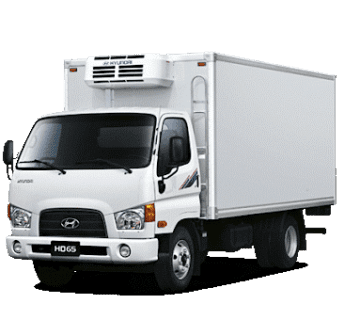
Before we examine the differences between van and truck cold storage, we will first provide a brief explanation of these two types of cold storage. These two examples of car cold storage are two types of refrigerated vehicles that are used to transport temperature-sensitive products such as food, medicines and other goods that require controlled temperatures. The van cold storage is generally smaller and suitable for local transportation, while the truck cold storage is designed to move longer distances and heavier loads due to its greater capacity and more advanced systems.

Differences between van and truck cold storage
In this section, we will examine the differences between van and truck cold storage and examine the features of both cold storage models.
︎Transportation capacity
One of the most important differences between van and truck cold storage is their loading capacity. Due to its smaller dimensions, the van cold storage has a lower load carrying capacity.
These types of refrigerated trucks are typically used for light-duty transportation and local distribution. For example, a local bakery might use a refrigerated van to deliver fresh produce to customers daily.
In contrast, a refrigerated truck with a larger loading capacity can handle larger volumes of goods. These types of refrigerated trucks are suitable for transporting products over long distances and intercity routes. Refrigerated trucks are commonly used in the wholesale sector, large food industries, and export products.
︎ Costs and Efficiency
In terms of costs, refrigerated vans are more suitable for smaller businesses and local distribution due to their smaller dimensions, lower fuel consumption, and lower maintenance costs. Using a van for local transportation can significantly reduce a business’s operating costs, especially if small and light loads need to be transported.
In contrast, a truck-mounted refrigerated truck requires higher fuel, maintenance, and repair costs due to its larger size and more advanced systems. However, in businesses that need to transport larger loads and distribute over long distances, using a truck makes economic sense due to its higher capacity and better efficiency per load.
︎Flexibility and ease of movement
One of the main advantages of a van-mounted refrigerated truck is its flexibility and ease of movement. Due to their smaller dimensions, vans can easily move through narrow city streets and even narrow alleys.
This feature makes them a suitable option for small and local businesses that need to move and deliver products quickly in different areas.
In contrast, truck-mounted refrigerated trucks face limitations on urban and busy routes due to their larger size. These trucks require more space for parking and loading and cannot easily move in busy environments. This can be a big challenge for businesses in crowded urban areas.
Product Storage Duration and Quality
One of the important factors in choosing between a van and a truck is the duration and quality of product storage inside the vehicle. Due to their smaller size and simpler cooling systems, a van is suitable for transporting small loads and short-term storage. If products need to be transported over long distances, van cooling systems may not be able to maintain product quality well.
In contrast, refrigerated trucks with more advanced cooling systems and larger capacity can keep products at the right temperature for longer. This feature is especially crucial for transporting sensitive products such as meat, fish and medicines that require precise temperature control.
Specific applications of each type of cold storage
Due to their specific features such as greater speed, lower cost and ability to travel in crowded areas, van cooling is mostly used for local transportation and rapid distribution. For example, a local restaurant can use a refrigerated van to deliver fresh food to its customers.
A refrigerated truck is suitable for intercity and even international transportation due to its larger capacity and greater power in maintaining temperature. This type of refrigerated truck is used to move bulk and heavier products such as meat products, frozen foods, and pharmaceutical products that need to maintain temperature for a long time.

Advantages and disadvantages of each type of refrigerated truck
In the following, we will compare the differences between a refrigerated truck and a refrigerated truck, and in the third section, we will examine the advantages and disadvantages of each of these two refrigerated trucks.
Advantages of refrigerated truck:
– Lower operating costs
– Ability to travel on narrow roads and urban areas
– Faster delivery of local products
Disadvantages of refrigerated truck:
– Limited loading capacity
– Shorter product storage time
– Not suitable for long distances
Advantages of refrigerated trucks:
– Larger loading capacity
– Higher quality in storing temperature-sensitive products
– Suitable for intercity and international transportation
Disadvantages of refrigerated trucks:
– High operating and maintenance costs
– Restrictions on traffic in crowded urban areas
– Need for more space for parking and loading
A suitable choice based on business needs
The choice between a refrigerated van and a refrigerated truck should be made based on the needs and conditions of the business. If your business operates in the field of local distribution and needs fast movement and daily delivery of products, a refrigerated van is a suitable option. This type of vehicle can increase your productivity due to its lower costs and ability to travel in crowded areas.
On the other hand, if your business needs intercity transportation and the movement of bulk and temperature-sensitive products, a refrigerated truck is a better choice. Due to its larger capacity and more advanced systems, the truck can deliver your products to their destination in optimal conditions and with high quality.
Conclusion
In this article, we have examined the differences between a refrigerated van and a refrigerated truck, and discussed the advantages and disadvantages of each. The choice between these two types of vehicles depends on your business needs, the type of product, and the distance to be transported. For local transport and quick distribution, a refrigerated van is an economical and efficient option, while for larger and longer movements, a refrigerated truck is a good choice due to its greater capacity and better preservation of products.



No comment